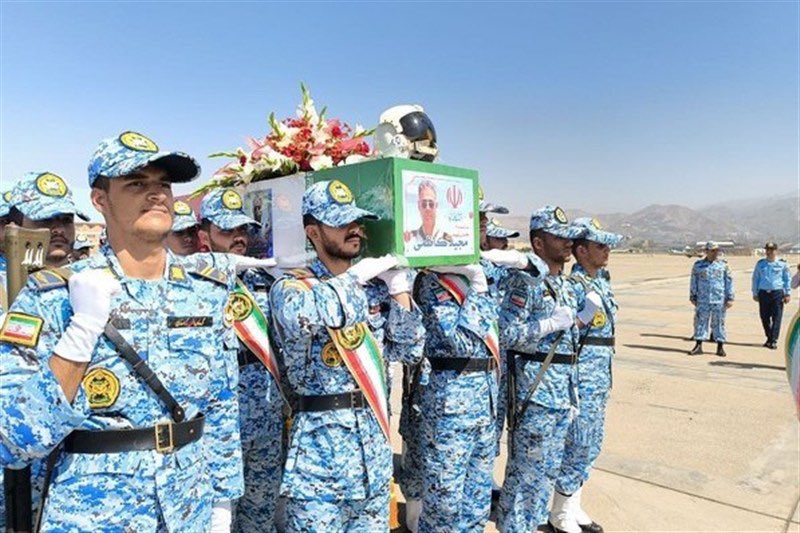
Reposted by Sh1n (Dave) from @golgeveri. Four Iranian airmen flew toward Qatar; one returned in a coffin and three disappeared. For nearly five months Iran officially called them missing, but now Tehran says Qatar has been hiding them alive since March.
Two Su-24 bombers were shot down near Qatar on March 2. There is no evidence either aircraft force-landed; no runway emergency, intact airframe, or land crash site was reported. If the three men survived, they almost certainly ejected over the Gulf. The Su-24's K-36D escape seats can work at extremely low altitude, but the aircraft were reportedly flying around 80 feet above the sea when engaged. Survival would have depended on missile impact, aircraft attitude, parachute deployment, and how quickly rescuers reached them.
Qatar controlled the airspace, radar picture, and surrounding waters; if the pilots entered the sea alive, Qatari forces were probably first able to find them. The post says Iran's accusation is physically plausible, but Tehran has shown no photographs, emergency-beacon data, intercepted communications, rescue coordinates, witnesses, messages from the pilots, or ICRC confirmation. On July 29 Iran's Army still said their fate was unknown; two weeks later Gen Mohammad Bagherzadeh claimed Qatar had held all three for six months.
The timing matters: Qatar is carrying messages between Tehran and Washington. Accusing Doha of concealing Iranian prisoners gives Tehran leverage over the mediator and turns a disastrous, disputed air mission into a national grievance. Qatar also benefits from denial; acknowledging prisoners would expose details of the interception, trigger ICRC access and prisoner-of-war obligations, risk Iranian retaliation, and damage Doha's attempt to appear neutral while hosting Al Udeid. Qatar controls radar recordings, engagement data, and search-and-rescue logs, none public. Doha says it invited Iranian investigators in April and received no response; Tehran says its team has spent months waiting for Qatar to let it enter.
The post concludes: "Someone is not telling the whole story." The pilots may have died at sea or been rescued and detained; Iran may be manufacturing certainty where none exists and Qatar may be concealing what its forces recovered. For now, three men remain trapped between two governments, two sealed military archives, and two stories that cannot both be true.

Discussion
Comments
No approved comments yet.